
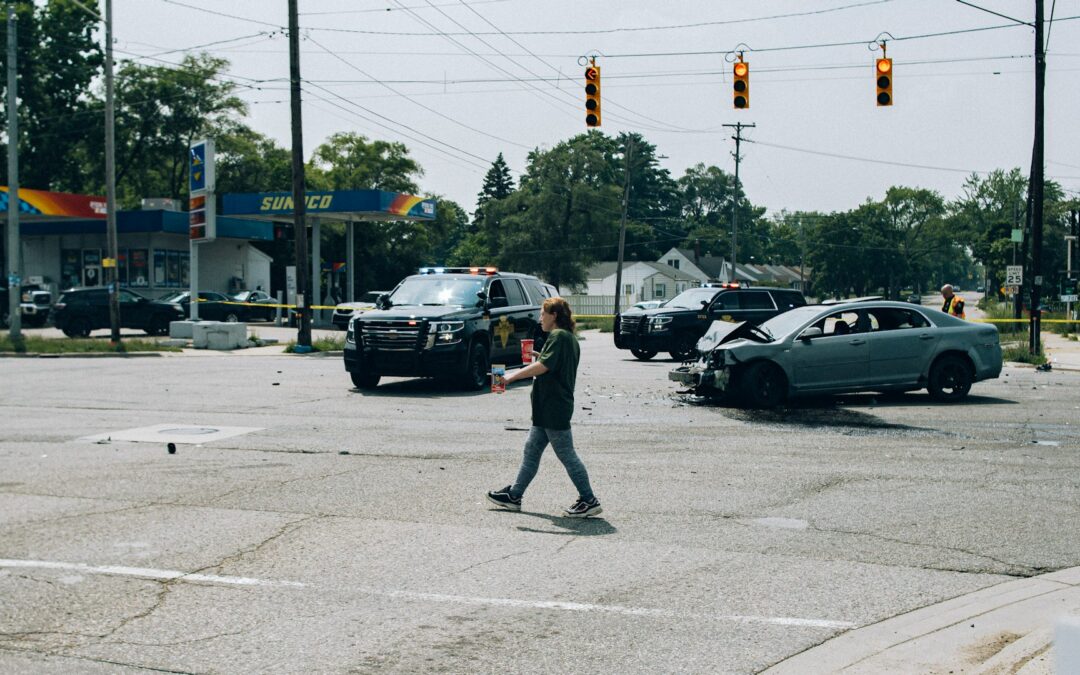
California comparative fault allows an injured person to recover compensation even when they were partly responsible for the accident that caused their injuries.
Instead of automatically barring recovery because the injured person shares some blame, California generally reduces the person’s damages according to their percentage of fault.
This rule can have a major impact on a personal injury case because insurance companies often try to shift part of the blame onto the injured person. Even a relatively small percentage of assigned fault can reduce the amount ultimately recovered.
Understanding California comparative fault is therefore important in car accidents, motorcycle crashes, bicycle collisions, pedestrian cases, premises liability claims, dangerous roadway cases, and many other types of personal injury cases.
What Is California Comparative Fault?
California comparative fault is the legal principle used to divide responsibility when more than one person or entity contributed to an injury.
Under California’s comparative fault system, an injured person may still recover damages even if they share part of the responsibility for what happened.
The person’s recovery is generally reduced in proportion to the percentage of fault assigned to them.
For example, if a person suffers $500,000 in damages but is found 20% at fault, the recoverable amount may be reduced by 20%, leaving $400,000.
The important point is that partial fault does not necessarily eliminate the claim.
Is California a Pure Comparative Fault State?
California follows a pure comparative fault approach.
That means a plaintiff can potentially recover damages even when their share of fault is substantial, although the recovery is reduced by that percentage.
This differs from states that use modified comparative fault rules, where a plaintiff may be barred from recovery after reaching a particular percentage of responsibility.
In California, the focus is generally on assigning percentages of responsibility and reducing damages accordingly.
How Comparative Fault Changes Compensation
The easiest way to understand California comparative fault is through examples.
Example: 10% Fault
If total damages are $300,000 and the injured person is found 10% responsible, the damages may be reduced by $30,000, leaving $270,000.
Example: 40% Fault
If total damages are $1 million and the injured person is found 40% responsible, the recoverable amount may be reduced to $600,000.
Example: More Than 50% Fault
Even if the injured person is assigned more than half the fault, California’s pure comparative fault system may still allow recovery, subject to a reduction reflecting that percentage.
Who Decides the Percentage of Fault?
Fault may be disputed during insurance negotiations, mediation, litigation, or trial.
If the case goes to trial, the jury may be asked to evaluate the conduct of the parties and assign percentages of responsibility.
The determination can depend on:
- Witness testimony
- Photographs and video
- Police or incident reports
- Vehicle damage
- Electronic data
- Roadway evidence
- Expert reconstruction
- Medical evidence
- The conduct of each person involved
This is why preserving strong evidence in a personal injury claim can be especially important when fault is disputed.
How Insurance Companies Use Comparative Fault
Insurance companies often look for ways to argue that the injured person contributed to the accident.
Common arguments may include claims that the injured person:
- Was speeding
- Was distracted
- Failed to keep a proper lookout
- Entered an intersection unsafely
- Ignored a warning
- Was using unsafe equipment
- Failed to take reasonable precautions
These arguments can reduce the value of a claim even when the defendant was clearly negligent.
This is one of the tactics discussed in our article on how insurance companies undervalue injury claims.
Comparative Fault in Car Accident Cases
Comparative fault frequently becomes an issue in car accident claims.
For example, one driver may have run a red light while the other was traveling above the speed limit.
The driver who ran the light may bear most of the responsibility, while the speeding driver may still be assigned a smaller percentage if the speed contributed to the collision or severity of the impact.
Other disputes may involve lane changes, following distance, distracted driving, left turns, right-of-way issues, or visibility.
Comparative Fault in Bicycle and Motorcycle Accidents
Insurance companies sometimes attempt to shift blame onto cyclists and motorcyclists, particularly when serious injuries are involved.
In bicycle accident cases, an insurer may argue that the cyclist was outside a bike lane, failed to signal, or was difficult to see.
In motorcycle accident cases, insurers may focus on speed, lane positioning, visibility, or protective equipment.
The fact that an insurer raises these issues does not mean the argument is valid. The evidence must be evaluated to determine whether the conduct actually contributed to the crash or injuries.
Comparative Fault in Pedestrian Accidents
Pedestrian accident claims can also involve shared-fault allegations.
A driver may have failed to yield while an insurer argues that the pedestrian crossed outside a marked crosswalk, entered traffic unexpectedly, or was distracted.
These cases often require careful review of visibility, traffic controls, vehicle speed, roadway design, witness testimony, and available video.
Comparative Fault in Premises Liability Cases
In a premises liability case, a property owner may argue that the injured person should have noticed or avoided the dangerous condition.
For example, the defense may argue that a hazard was open and obvious or that the visitor was not paying attention.
The key issue is not simply whether the injured person could have acted differently. The conduct of both sides must be considered, including whether the property owner created, knew about, or failed to correct a dangerous condition.
Comparative Fault in Dangerous Roadway Cases
Some collisions involve more than driver error.
Unsafe roadway design, poor sight distance, defective traffic controls, inadequate warnings, dangerous construction zones, or maintenance failures may contribute to a crash.
In those cases, fault may be divided among a driver, another motorist, a contractor, a public entity, or other responsible parties.
Claims involving dangerous roadways can become especially complex because multiple causes may overlap.
Can Multiple Defendants Share Fault?
Yes. More than one defendant may contribute to the same injury.
For example, a serious crash may involve:
- A negligent driver
- A trucking company
- A vehicle manufacturer
- A roadway contractor
- A government entity
Fault allocation can become more complicated when multiple parties contributed to the same event.
Comparative Fault and Negligence
Comparative fault is closely connected to negligence.
Negligence generally involves a failure to use reasonable care that causes harm. Comparative fault addresses what happens when more than one person’s negligence contributed to the injury.
For a broader explanation of negligence, see our guide to negligence in California personal injury cases.
How Comparative Fault Affects Damages
California comparative fault can affect both economic and non-economic damages because the plaintiff’s total recovery may be reduced by the assigned percentage of responsibility.
Damages may include:
- Medical expenses
- Future medical expenses
- Lost wages
- Lost earning capacity
- Pain and suffering
- Disability
- Disfigurement
This is why even a seemingly small shift in the percentage of fault can materially affect the value of a personal injury case.
What Evidence Helps Fight an Unfair Fault Allegation?
When an insurer tries to place unnecessary blame on the injured person, evidence becomes critical.
Useful evidence may include:
- Dash-camera footage
- Surveillance video
- Witness statements
- Vehicle event-data recorders
- Cellphone records
- Scene photographs
- Skid marks or debris patterns
- Traffic-signal timing
- Expert accident reconstruction
Evidence collected early can make it easier to evaluate what each party actually did and whether that conduct contributed to the accident.
Does an Insurance Company’s Fault Decision Control the Case?
No. An insurance adjuster’s fault determination is not the final legal decision.
An insurer may assign a percentage of fault during negotiations, but that position can be challenged with additional evidence, expert analysis, litigation, or trial.
This is especially important when the insurer’s allocation appears designed primarily to reduce the claim.
Why Early Investigation Matters
Comparative fault disputes often depend on evidence that can disappear quickly.
Video may be overwritten, vehicles may be repaired, road conditions may change, and witnesses may become difficult to locate.
Early investigation can help preserve the information needed to accurately reconstruct what happened.
Common Mistakes When Fault Is Disputed
- Assuming partial fault means there is no case. California law may still allow recovery.
- Accepting an insurer’s fault percentage without reviewing the evidence. The insurer’s position can be challenged.
- Giving unnecessary recorded statements. Statements can later be used to support a comparative-fault argument.
- Failing to preserve evidence. Video and physical evidence can disappear quickly.
- Focusing only on one cause. Serious accidents may involve multiple contributing factors and defendants.
Frequently Asked Questions About California Comparative Fault
Potentially, yes. California uses a pure comparative fault system, so partial responsibility does not necessarily bar recovery. Instead, damages may be reduced according to the percentage of fault assigned to the injured person.
If you are found 25% at fault, your total damages may generally be reduced by 25%. For example, $200,000 in damages could be reduced to $150,000.
Potentially, yes. California’s pure comparative fault system can allow recovery even when the plaintiff’s share of fault exceeds 50%, although the recovery is reduced by the assigned percentage.
Generally, a defendant who claims that the plaintiff or another party shares fault must support that position with evidence. The exact burden can depend on the claims and defenses involved.
An insurer can take a position on fault during the claims process, but that position is not necessarily final. Fault can be disputed through evidence, negotiation, litigation, and ultimately a jury determination if the case goes to trial.
Protecting Your Claim When Fault Is Disputed
California comparative fault does not automatically eliminate a personal injury claim simply because the injured person may have contributed to the accident.
The real issue is how responsibility should fairly be divided based on the evidence.
Because insurers may use fault allegations to reduce compensation, careful investigation, evidence preservation, witness interviews, and expert analysis can become critical in serious cases.
Ellis Riccobono, LLP represents clients in Ventura County, Los Angeles County, and throughout California in serious personal injury matters. The firm’s trial lawyers investigate disputed liability, preserve evidence, work with qualified experts, and prepare cases for trial when necessary.