California Dangerous Roadway Lawyers
Not every serious crash is caused only by driver error. Some accidents happen because a road, intersection, highway, bike lane, crosswalk, or construction zone was unsafe before the crash ever occurred.
Dangerous roadway cases may involve poor road design, missing signs, broken traffic signals, faded lane markings, unsafe curves, inadequate lighting, potholes, debris, drainage problems, or construction hazards. These claims can be especially complex because the responsible party may be a city, county, state agency, contractor, utility company, or another entity involved in designing, building, maintaining, or repairing the roadway.
ER Trial Lawyers represents people seriously injured because of unsafe road conditions throughout California. Our attorneys investigate roadway defects, preserve evidence, work with qualified experts, and prepare cases for trial when public agencies, contractors, or insurance companies refuse to accept responsibility.
What Makes a Roadway Dangerous Under California Law?
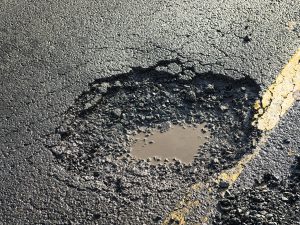
Under California law, a roadway may be considered dangerous when its design, condition, maintenance, or lack of proper warning creates a substantial risk of injury to drivers, motorcyclists, bicyclists, pedestrians, or other road users when the roadway is used with reasonable care.
These hazards are often referred to as dangerous conditions of public property and can arise from poor road design, inadequate maintenance, unsafe construction zones, missing warnings, or a failure to correct known safety problems.
Common examples of dangerous roadway conditions include:
- Potholes, cracked pavement, or uneven road surfaces
- Poorly designed intersections or confusing traffic patterns
- Missing, damaged, or obscured traffic signs and signals
- Faded lane markings or poorly marked lanes
- Inadequate lighting, guardrails, or safety barriers
- Dangerous curves or unsafe roadway design
- Roadways that flood or accumulate debris
- Unsafe bike lanes, crosswalks, or pedestrian areas
- Construction zones without proper warnings or protections
When a government agency, contractor, utility company, or other responsible party knew — or should have known — about a dangerous roadway condition and failed to fix it or warn the public, they may be held legally responsible for resulting injuries.
These claims may involve crashes caused by roadway design defects, poor maintenance, missing warnings, construction hazards, or dangerous conditions that were ignored after prior complaints, prior accidents, or known safety concerns.
Who Is Liable for Injuries Caused by Dangerous Roadways?
Liability for injuries caused by dangerous roadways in California often depends on who owned, controlled, designed, built, repaired, or maintained the road at the time of the accident. In many cases, responsibility may fall on a government entity, a private contractor, utility company, or more than one responsible party.
Potentially liable parties may include:
- City or municipal governments responsible for local streets
- County agencies that maintain county roads
- The State of California or Caltrans for highways and state-controlled roadways
- Transportation agencies or public works departments
- Construction or maintenance contractors hired to perform roadwork
- Subcontractors involved in road construction, signage, paving, lighting, or traffic control
- Utility companies that create or fail to correct roadway hazards
- Private property owners when dangerous access roads, driveways, or parking areas contribute to a crash
Government agencies have a legal duty to keep public roadways reasonably safe. When they fail to repair known hazards, ignore complaints, delay necessary maintenance, or approve unsafe designs, they may be held accountable under California’s government liability laws.
Claims involving dangerous roadways are often more complex than standard accident cases because they may involve multiple responsible parties, shorter deadlines, special notice requirements, and strict procedural rules.
Government Claim Deadlines for Dangerous Roadway Accidents
In California, injury claims involving dangerous roadways are subject to strict and unusually short deadlines, especially when a government entity is involved. Unlike standard personal injury cases, claims against public agencies must follow special legal procedures before a lawsuit can even be filed.
In most cases, injured victims must submit a formal government claim to the appropriate public entity within six months of the date of the accident. This requirement may apply to claims against cities, counties, transportation agencies, and the State of California for injuries caused by unsafe road design, poor maintenance, missing warnings, or other dangerous roadway conditions.
If the claim is denied — or not properly handled — additional deadlines apply for filing a lawsuit. Missing any of these steps can permanently bar an injured person from recovering compensation, regardless of how dangerous the roadway may have been.
Because evidence can disappear quickly and government claim deadlines may be short, it is important to act quickly after a crash involving a suspected roadway defect. These cases often involve strict notice rules, documentation requirements, and legal defenses unique to government entities, making it critical to work with attorneys who understand how roadway liability claims are handled in California.
Injuries Commonly Caused by Dangerous Road Conditions
Dangerous roadway conditions can cause sudden, unavoidable crashes that lead to severe and often permanent injuries. Because road defects often give drivers, riders, bicyclists, and pedestrians little time to react, the resulting harm can be far more serious than in an ordinary traffic accident.
Common injuries associated with dangerous roadways include:
- Traumatic brain injuries and concussions
- Spinal cord injuries and paralysis
- Broken bones and complex fractures
- Severe road rash and soft tissue injuries
- Internal organ damage
- Crush injuries
- Amputations
- Permanent disability or loss of mobility
- Fatal injuries and wrongful death
Motorcyclists, bicyclists, and pedestrians are especially vulnerable when road surfaces are uneven, poorly marked, poorly lit, or inadequately maintained. Even a single pothole, missing warning sign, unsafe intersection, or dangerous roadway design can result in catastrophic injuries that require surgery, long-term medical care, rehabilitation, and ongoing support.
When unsafe roads lead to fatal crashes, surviving family members may also have the right to pursue a wrongful death claim against the responsible government entity, contractor, or other liable party.
Compensation Available for Dangerous Roadway Accidents
Victims injured by dangerous roadway conditions in California may be entitled to pursue compensation for the full impact of their injuries, not just immediate medical costs. Because these accidents often involve serious or permanent harm, damages can be substantial.
Compensation in a dangerous roadway claim may include:
- Current and future medical expenses
- Lost wages and reduced earning capacity
- Pain and suffering
- Emotional distress and loss of quality of life
- Rehabilitation and long-term care costs
- Permanent disability or disfigurement
- Home modifications or assistive care needs
- Wrongful death damages in fatal accident cases
The value of a dangerous roadway claim depends on the severity of the injuries, the available evidence, the role of the public agency, contractor, or other responsible party, and whether the hazardous condition had been previously reported or should have been discovered through reasonable inspection.
Because these claims may involve government entities, private contractors, insurance companies, and competing liability defenses, it is important to identify every potential source of recovery before accepting a settlement or assuming the case is limited to one responsible party.
Why Choose ER Trial Lawyers for Dangerous Roadway Claims?
Dangerous roadway cases are among the most complex personal injury claims in California. Government entities and contractors often deny responsibility, raise immunity defenses, or argue they had no prior notice of the hazardous condition. Successfully pursuing these cases requires attorneys who understand how to investigate roadway defects, preserve evidence, work with experts, and navigate government liability laws.
ER Trial Lawyers has experience handling serious roadway defect cases, including a $6 million settlement involving a motorcycle crash, traumatic brain injury, and dangerous road condition. Results like this reflect the firm’s ability to investigate complex roadway claims, identify responsible parties, and pursue accountability when unsafe roads cause catastrophic injuries.
At ER Trial Lawyers, our trial attorneys represent clients injured by unsafe road conditions across California. We work with engineers, accident reconstruction experts, roadway safety specialists, and other qualified professionals to identify design flaws, maintenance failures, missing warnings, and regulatory violations that contribute to serious crashes.
Our firm prepares dangerous roadway claims with trial in mind from the beginning. When public agencies, contractors, or insurance companies refuse to accept responsibility, ER Trial Lawyers is prepared to take the case to trial and fight for full accountability.
Dangerous Roadway Lawyers Serving Ventura County and Los Angeles County
ER Trial Lawyers represents clients injured by dangerous road conditions throughout Southern California, including Ventura County and Los Angeles County. With offices in Westlake Village and Manhattan Beach, our firm is positioned to help accident victims across both regions.
Unsafe roads can affect drivers, motorcyclists, bicyclists, and pedestrians in many different settings, including poorly maintained local streets, dangerous intersections, coastal roads, canyon roads, construction zones, freeway ramps, and state highways.
Our attorneys understand how to investigate roadway defects, identify responsible public agencies, contractors, or other liable parties, and preserve evidence before it disappears. Whether the crash involved poor road design, missing warnings, inadequate lighting, unsafe traffic control, or neglected maintenance, ER Trial Lawyers can help determine whether a dangerous roadway claim may exist.
Whether your accident occurred in Ventura County, Los Angeles County, or elsewhere in California, our attorneys can help you understand your legal options and the deadlines that may apply to your case.
Frequently Asked Questions About Dangerous Roadways in California
What qualifies as a dangerous roadway in California?
A roadway may be considered dangerous if its design, condition, maintenance, or lack of proper warning creates a substantial risk of injury when used with reasonable care. Examples may include potholes, unsafe intersections, missing signs, faded lane markings, inadequate lighting, flooding, debris, or failure to repair known hazards.
Can I sue a city or government agency for a dangerous road?
Yes. California law allows injury claims against government entities when a dangerous condition of public property causes harm. These claims may involve cities, counties, Caltrans, transportation agencies, or other public entities, but they must follow special rules and shorter deadlines than standard personal injury cases. California Courts’ self-help guidance confirms that a claim must generally be filed with the agency before a lawsuit can proceed.
How long do I have to file a dangerous roadway claim?
In many dangerous roadway cases involving a public entity, an injured person must file a formal government claim within six months of the accident. If the agency denies the claim, additional deadlines apply for filing a lawsuit. Missing these deadlines can seriously affect or prevent recovery.
Who is responsible for maintaining safe roadways?
Responsibility may fall on a city, county, the State of California, Caltrans, a transportation agency, contractor, subcontractor, utility company, or private property owner, depending on who owned, controlled, designed, repaired, or maintained the roadway. Determining liability often requires investigation, public records review, and expert analysis.
What if poor road conditions contributed to my accident?
You may still have a valid claim even if another driver was also involved. Dangerous roadway conditions can be a contributing cause of a crash, which may allow claims against additional responsible parties such as government agencies, contractors, or other entities involved in creating or maintaining the hazard.
What evidence is important in a dangerous roadway claim?
Important evidence may include photos or video of the hazard, police reports, witness statements, prior complaints, maintenance records, repair history, traffic collision history, inspection records, and expert analysis. Because road conditions can change quickly, it is important to begin investigating as soon as possible.
How much does it cost to hire a dangerous roadway lawyer?
ER Trial Lawyers represents clients on a contingency fee basis. That means there are no upfront legal fees, and the firm only gets paid if compensation is recovered for the client.
If you were injured due to dangerous roadway conditions in California, it’s important to understand your legal rights as soon as possible. Claims involving unsafe roads often require prompt action, careful investigation, and strict compliance with government claim deadlines.
ER Trial Lawyers represents individuals harmed by dangerous road conditions across California. Our attorneys can evaluate your case, explain your options, and help determine whether a city, county, state agency, or contractor may be held responsible.
Contact us today for a free consultation. There is no cost unless compensation is recovered.
Contact Our Firm to Learn More
If there is no recovery, then there are never any fees or costs to you.