
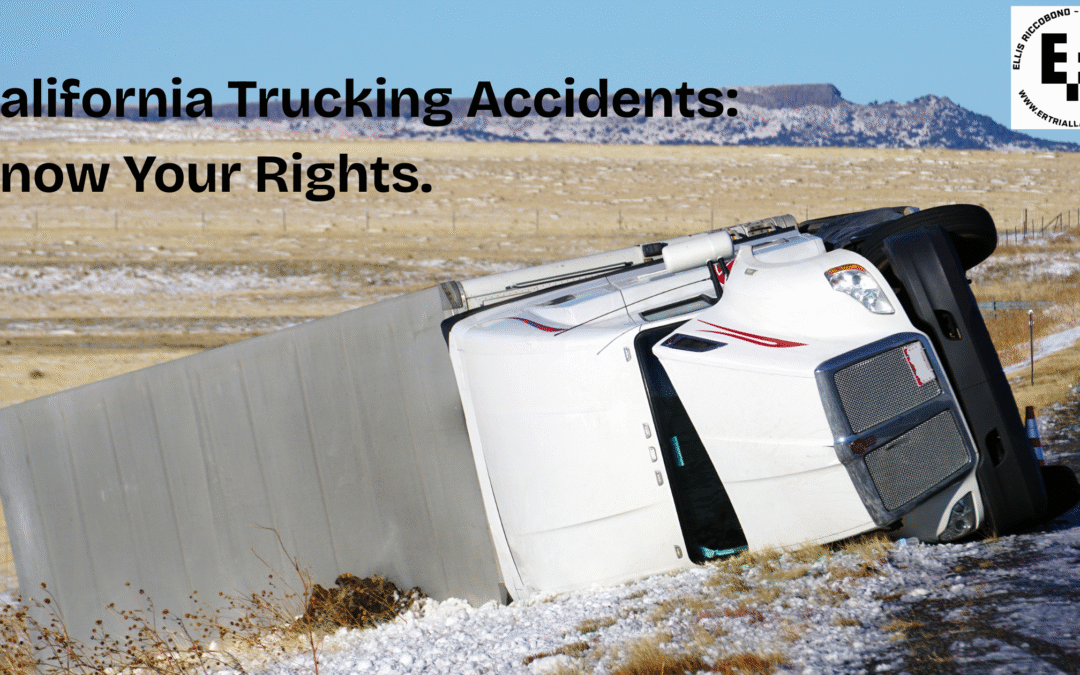
Thousands of big trucks are traveling on the California highways daily, with goods that are essential to the running of our economy. But these vehicles pose a particular threat in case of an accident due to their enormous size and weight. One trucking accident may result in devastating injuries, chronic physical disabilities, and disastrous economic damages suffered by the victims and their families.
We have realized that a trucking accident can be life-altering at Ellis & Riccobono Trial Lawyers. Our law firm has been able to represent its clients throughout California and Hawaii, challenge such mighty trucking companies, corporate defendants, and their insurers, and get justice and fair compensation.
This paper decomposes the factors that lead to trucking accidents, who can be sued, how one can save damages, and why involving an experienced trial law firm is everything.
Protecting Your Rights After a Serious Trucking Accident
1. The Growing Concern of Trucking Accidents in California
California is one of the leading states within the U.S. in terms of trucking traffic of commerce. The number of semi-trucks and 18-wheelers is incredibly high, with major areas of trade, such as I-5, I-10, and Highway 99, being connected with each other. Such, unfortunately, also implies additional chances to get into serious crashes.
The Federal Motor Carrier Safety Administration (FMCSA) has asserted that every year, more than 5,000 accidents involving large trucks take place in the country, and most of them are fatal or cause serious injuries. In California, such incidents are usually characterized by more than one vehicle and may also result in pileups, rollovers, or even highway closures.
Usually, the victims are small-car drivers, motorcycle riders, or pedestrians, people who do not have much to protect them in case of an incident with a 40-ton commercial truck.
2. Common Causes of Trucking Accidents
Accidents involving trucks are not that easy. They are usually characterized by more than one aspect and participant. The most common causes are:
- Driver Fatigue: Although federal laws mandate rest, some of the truck drivers drive beyond legal working hours, which causes them to get tired and react slowly.
- Distracted Driving: Cell phone use, GPS systems, or onboard systems can create a lapse in time, which causes a catastrophe.
- Speeding or Reckless Driving: Commercial trucks take a lot of distance before halting, so speeding in particular is risky.
- Misrepresentation of Maintenance: Trucking companies must conduct regular vehicle inspections and maintenance. Defective brakes, damaged tires, or engine malfunctions can lead to disastrous accidents.
- Overloaded or Unsecured Cargo: The loads that are not perfectly balanced or secured can move during transportation and make the trucks dangerous or lead to the spillage of cargoes on roads.
- Driving Under the Influence: Drunkenness or Under the influence of drugs – Under the influence of alcohol or drugs, driving ability and responsiveness are not possible.
A combination of these factors leads to the exponential increase in the risk of a serious injury.
3. Determining Liability in a Truck Accident
A case of a trucking accident is one of the most complicated areas when it comes to determining who is to bear the legal responsibilities. Contrary to the usual automobile accidents, there can be many responsible parties who may include:
Truck Driver: When the driver was careless- speeding, distracted, or when the driver was tired.
Trucking Company: If the company was promoting unsafe schedules, not maintaining the vehicles, or recruiting unqualified drivers.
Cargo Loader or Shipper: In case it is due to improper loading or weight distribution, which contributed to the accident.
Truck Manufacturer, or Maintenance Provider: In case some flawed part or bad repair contributed to it.
4. What to Do After a Trucking Accident
In case you have been involved in an accident involving a truck, what you do right after the accident will have a serious impact on your legal claim. These were key measures to consider:
- Obtain Medical Care ASAP: Although you may not feel ill, certain types of injuries like internal bleeding or concussion may not manifest themselves immediately.
- Report the Accident: Fall under the law enforcement and have an official report registered.
- Gather Evidence: Photograph the accident scene, the damage to the vehicle, and injuries in view. Gather eyewitness data where feasible.
- Avoid Talking to Insurance Adjusters: Insurers and trucking companies may call you immediately to downplay liability. Settlements should not be signed or accepted without talking to an attorney.
- Hire a Personal Injury Attorney: The laws concerning trucking accidents are complicated, with federal and state laws. The availability of a legal professional ensures that you are not compromised on your rights.
5. Types of Compensation Available
Some of the compensation forms offered to the victims of the trucking accidents may depend on the extent of the loss and damage suffered. These may include:
- Medical Expenses: Hospital bill, surgeries, rehabilitation, physical therapy, and permanent treatment.
- Lost Wages and Earning Capacity: A measure of loss of earnings and earning capacity in the future.
- Pain and Suffering: Suffering, distress, and inability to enjoy life.
- Property damage: Repair or replacement of the vehicle
- Punitive Damages: When there is gross negligence, e.g., driving under the influence or falsified log books.
Our lawyers will doggedly pursue complete and just compensation that will really be an indication of how your life will be affected in the long run.
6. How Long Do You Have to File a Claim?
The personal injury statute of limitations in California (including trucking accidents) is normally two years following the time of the accident. There are, however, some exceptions, namely, when it comes to government organizations or faulty products.
Evidence may be lost very fast (logbooks, camera recordings, GPS locations), so it is important to reach an attorney as soon as the event has happened. Your lawyer can save important records by taking immediate action and developing your case.
7. Why Choose Ellis & Riccobono Trial Lawyers
We are not attorneys at Ellis and Riccobono Trial Lawyers; we are crusaders of justice. We have many years of combined experience in personal injury and trial litigation, achieving a history of massive verdicts and settlements.
Here’s what sets us apart:
- Trial-Level Experience: We set up all the cases like they were on trial, which provides you with bargaining power at the negotiation level.
- Resources and Expert Network: Availability of experts and specialists in accident reconstruction, medical specialists, and industry.
- Client-Centered Advocacy: There will be no case managers; you will be dealing directly with attorneys.
- Contingency Fee Basis: You will not pay any fee, that is, unless we win your case.
We are very proud to represent people, not corporations, and oppose some of the biggest trucking and insurance corporations in California and Hawaii..
8. Common Injuries in Trucking Accidents
Due to the size and power, truck accidents tend to cause life-altering injuries such as:
- Traumatic brain injuries (TBI).
- Damage and paralysis of the spinal cord.
- Broken or crushed bones
- Serious lacerations and burns.
- Internal organ damage
- Amputations
- Mental stress, such as PTSD.
The victims can end up being permanently disabled, or the recovery might take years. Our company collaborates with health care providers in determining the quality of long-term care, precisely to determine prices in the future, so that you are not left stranded economically.
9. Holding Negligent Trucking Companies Accountable
The state and federal regulations govern all areas in commercial trucking, such as the duration of driver rest and truck inspection. However, it is a shame that most firms put their money ahead of their safety. They can coerce drivers to drive without taking breaks, or falsify trucking lo, gs or cut corners in maintenance.
Ellis and Riccobono blame them when such violations are harmful. We go deep into the company books and practices of the employees and regulatory compliance to bring out trends of negligence that build your case.
10. Get the Legal Help You Deserve
If you or a loved one has been injured in a trucking accident, you don’t have to face the You do not need to deal with the repercussions on your own in case of an accident involving trucks, or yourself, and a loved one. The road of recovery is usually very demanding, yet through the proper legal team, you will be able to rebrand your life with dignity and finances.
Ellis & Riccobono Trial Lawyers are ready to assist you throughout the process, including investigation and negotiation, and even trial in case.
Frequently Asked Questions (FAQ)
What are the steps to take immediately after a trucking accident?
Dial 911, seek medical care, file a police report, take photographs of the scene, get witness details, and hire a personal injury lawyer before talking with the representatives of an insurance company.
Who is responsible for a trucking accident in California?
Depending on the cause of the crash, liability can be in various parties, such as the truck driver, the trucking company, the cargo loaders, the vehicle manufacturer, and maintenance contractors.
What is the difference between a claim on a trucking accident and a car accident claim?
The accidents of trucking are regulated both at the state and federal levels, are subject to commercial insurance policies, and usually involve several parties to be held liable, which makes them more complicated and demands special juridical skills.
How much compensation can I recover after a trucking accident?
The worth of your claim is related to such issues as your injuries, health expenditures, loss of earnings, suffering and pain, and disability in the long term. A professional lawyer can estimate and seek total damages.
What are the cases when the truck driver is not directly employed by the company?
The trucking company can still share with the driver even when the driver was an independent contractor, based on the extent of control that it had over his/her schedule, his/her truck, and adherence to the regulations of the road.