
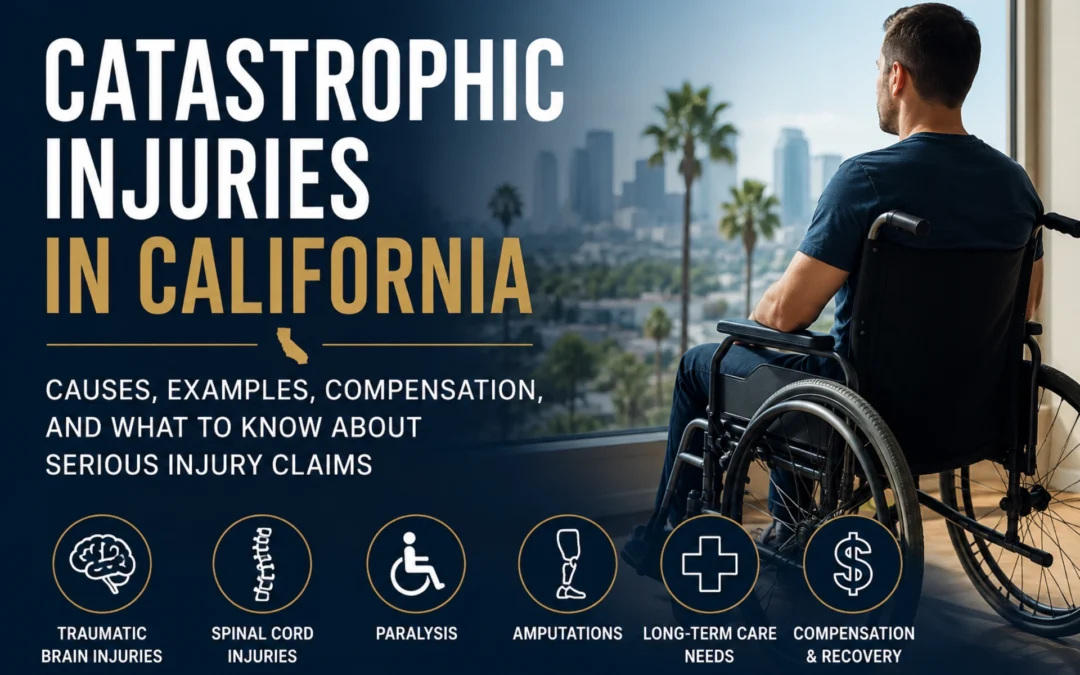
Some accidents cause injuries that heal with time and appropriate medical treatment. Others permanently change the course of a person’s life.
These severe, life-altering injuries are often described as catastrophic injuries. They may result in permanent disability, loss of mobility, cognitive impairment, disfigurement, or the need for extensive medical care and assistance with everyday activities.
For injured individuals and their families, the consequences can extend far beyond the initial hospitalization. A catastrophic injury may affect a person’s ability to work, live independently, maintain relationships, and participate in activities they once enjoyed.
The financial impact can also be substantial. A serious injury may create losses involving:
- Emergency medical treatment and hospitalization
- Surgeries and rehabilitation
- Future medical care
- Long-term assistance or nursing care
- Lost wages
- Reduced future earning capacity
- Permanent disability
- Pain and suffering
- Loss of enjoyment of life
When another person, company, or other responsible party causes a catastrophic injury through negligence or wrongdoing, California law may allow the injured person to pursue compensation for the resulting losses.
However, catastrophic injury cases require careful consideration of more than the expenses that have already occurred. A claim may need to account for medical treatment, lost earnings, and personal losses that will continue for years—or potentially for the remainder of the injured person’s life.
Understanding the long-term consequences of the injury before resolving a claim can therefore be critically important.
This guide explains what may be considered a catastrophic injury, common causes and examples, how these cases differ from other personal injury claims, and the types of compensation that may be available under California law.
What Is Considered a Catastrophic Injury?
The term catastrophic injury generally describes a severe injury that causes permanent or long-term consequences and significantly affects a person’s ability to work, live independently, or perform everyday activities.
Unlike an injury that is expected to heal completely, a catastrophic injury may require years of medical treatment, rehabilitation, adaptive equipment, or personal assistance. In some cases, the injured person may never fully recover.
There is no single type of injury that automatically defines every catastrophic injury claim. Instead, the severity of the injury and its long-term impact on the individual’s life are important considerations.
Characteristics of a Catastrophic Injury
Catastrophic injuries frequently involve one or more of the following:
- Permanent physical disability
- Significant cognitive impairment
- Paralysis or loss of mobility
- Loss of a limb
- Severe disfigurement
- Loss of vision or hearing
- Inability to return to previous employment
- Need for long-term medical treatment
- Need for assistance with daily activities
- Significant reduction in quality of life
The same type of injury can also affect people differently. An injury that prevents one person from returning to a physically demanding career, for example, may have different long-term consequences for someone whose occupation and daily activities are different.
Catastrophic Injuries Can Affect an Entire Family
The consequences of a catastrophic injury often extend beyond the injured person.
Family members may suddenly need to:
- Provide daily care
- Modify their home or vehicle
- Arrange transportation
- Manage medical appointments
- Reduce their own working hours
- Assist with financial and household responsibilities
In the most serious cases, professional caregivers or long-term residential care may become necessary.
The Full Impact May Take Time to Understand
Immediately after a serious accident, doctors may not yet know the injured person’s long-term prognosis.
Recovery can involve multiple surgeries, months of rehabilitation, and ongoing evaluations before physicians can determine whether certain limitations are temporary or permanent.
This uncertainty is one reason catastrophic injury claims should be evaluated carefully before settlement. Resolving a claim before future medical and personal needs are reasonably understood may result in compensation that does not adequately account for the long-term consequences of the injury.
Catastrophic Injury Claims Focus on the Future
Medical bills and lost wages that have already occurred are important, but catastrophic injury cases often require an even greater focus on what lies ahead.
Questions may include:
- Will additional surgeries be necessary?
- Will the person be able to return to work?
- Will the home require accessibility modifications?
- Will assistive equipment need to be replaced over time?
- Will professional caregiving be required?
- How will the injury affect the person’s independence and quality of life?
Answering these questions can be essential when determining the full extent of damages caused by a life-changing injury.
Catastrophic injuries can take many forms, ranging from permanent brain damage and paralysis to limb loss and severe burns. Understanding some of the most common examples helps illustrate why these cases often require extensive medical, financial, and legal evaluation.
Common Examples of Catastrophic Injuries
Catastrophic injuries can affect virtually every aspect of a person’s life. Although the severity and long-term consequences vary from case to case, certain injuries are particularly likely to result in permanent disability, extensive medical treatment, or a significant loss of independence.
Some of the most common examples include the following.
Traumatic Brain Injuries
A severe traumatic brain injury (TBI) can affect memory, reasoning, speech, personality, emotional regulation, and the ability to perform everyday tasks.
Depending on the area and extent of brain damage, an injured person may require:
- Cognitive rehabilitation
- Speech or occupational therapy
- Neurological care
- Medication
- Assistance with daily activities
- Long-term supervision or caregiving
Some brain injuries are immediately apparent, while others become better understood as symptoms and cognitive limitations continue over time.
Spinal Cord Injuries and Paralysis
Damage to the spinal cord can result in partial or complete paralysis and permanently affect mobility and independence.
A serious spinal cord injury may require:
- Surgery
- Extensive rehabilitation
- Wheelchairs or other mobility equipment
- Home accessibility modifications
- Vehicle modifications
- Personal assistance
- Ongoing medical care
The lifetime cost of care can be substantial, particularly when an individual requires daily assistance.
Amputation and Loss of Limbs
The loss of an arm, leg, hand, foot, or other body part can dramatically affect mobility, employment, independence, and quality of life.
An amputation injury may also create lifelong expenses associated with:
- Prosthetic devices
- Replacement prosthetics
- Physical therapy
- Occupational therapy
- Additional surgeries
- Home or vehicle modifications
- Treatment for phantom limb pain
The psychological and emotional effects of limb loss may also be significant.
Severe Burns
Serious burns can cause permanent scarring, disfigurement, nerve damage, infection, and loss of mobility.
Treatment may involve:
- Multiple surgeries
- Skin grafts
- Reconstructive procedures
- Physical therapy
- Pain management
- Psychological treatment
Severe burn injuries may require years of medical care and can permanently affect a person’s appearance and physical function.
Permanent Vision or Hearing Loss
Accidents can cause partial or complete loss of vision or hearing.
These injuries may affect a person’s ability to work, drive, communicate, and perform daily activities independently. Assistive technology, rehabilitation, occupational retraining, and long-term support may become necessary.
Severe Orthopedic Injuries
Complex fractures and damage to joints, muscles, or connective tissues can sometimes result in permanent physical limitations.
A person may require multiple surgeries, joint replacement, prolonged rehabilitation, or ongoing pain management. In severe cases, the injured individual may be unable to return to physically demanding employment.
Organ Damage and Internal Injuries
Serious trauma can permanently damage organs such as the heart, lungs, kidneys, liver, or other internal structures.
Some individuals may require ongoing medication, repeated medical procedures, or long-term monitoring. Organ damage can also increase the risk of future medical complications.
Multiple Severe Injuries
Catastrophic accidents frequently cause more than one significant injury.
For example, a person involved in a high-speed collision may simultaneously suffer a traumatic brain injury, fractures, internal organ damage, and permanent neurological impairment.
When multiple injuries occur together, the combined effect on the person’s ability to work and live independently can be substantially greater than the impact of any individual injury.
The Consequences Matter as Much as the Diagnosis
A catastrophic injury claim is not defined solely by the name of the medical condition. The long-term impact of the injury on the individual is critically important.
Two people with similar diagnoses may have dramatically different:
- Medical needs
- Employment limitations
- Caregiving requirements
- Levels of independence
- Future expenses
- Quality-of-life changes
For this reason, evaluating a catastrophic injury requires understanding not only what happened medically, but how the injury is expected to affect the person’s future.
These devastating injuries can result from many different types of incidents. Motor vehicle collisions are a major source of serious trauma, but dangerous products, unsafe property conditions, construction accidents, and other forms of negligence can also cause life-changing harm.
Accidents That Can Cause Catastrophic Injuries
Catastrophic injuries can occur in many different circumstances, but they are especially common when an accident involves significant force, high speeds, heavy equipment, fire, or an unprotected person being struck by a vehicle.
Identifying how the injury occurred is an important part of determining who may be legally responsible and what insurance coverage or other sources of compensation may be available.
Car Accidents
High-speed car accidents can cause traumatic brain injuries, spinal cord damage, severe fractures, internal injuries, and other permanent conditions.
Serious injuries are particularly likely in:
- Head-on collisions
- Rollover accidents
- High-speed intersection crashes
- Multi-vehicle collisions
- Accidents involving significant vehicle intrusion
When another driver’s negligence causes the collision, the injured person may be able to pursue compensation through a personal injury claim.
Trucking Accidents
Commercial trucks can weigh many times more than passenger vehicles, creating the potential for devastating injuries when a collision occurs.
Trucking accidents may involve additional issues such as:
- Commercial insurance policies
- Trucking company liability
- Driver training and supervision
- Hours-of-service violations
- Vehicle maintenance
- Cargo loading
- Federal and state safety regulations
Multiple parties may potentially share responsibility depending on what caused the crash.
Motorcycle Accidents
Motorcyclists have little physical protection when struck by another vehicle.
As a result, motorcycle accidents can cause severe injuries including brain trauma, spinal injuries, amputations, fractures, and permanent road-rash scarring.
Even a collision that causes relatively minor damage to a passenger vehicle can result in catastrophic injuries to a motorcycle rider.
Bicycle and Pedestrian Accidents
Bicyclists and pedestrians are similarly vulnerable because they have virtually no protection from the force of a motor vehicle.
Bicycle accidents and pedestrian accidents can result in traumatic brain injuries, orthopedic trauma, spinal damage, internal injuries, and permanent disability.
Cases involving vulnerable road users may also require careful investigation of roadway design, traffic controls, visibility, and driver behavior.
Dangerous Roadways
Sometimes a serious collision involves more than negligent driving.
A dangerous roadway, defective intersection, inadequate signage, poor roadway design, or other hazardous condition may contribute to an accident.
When a government entity may be responsible for a dangerous public roadway, special claim procedures and shorter deadlines can apply. These cases often require prompt investigation and preservation of evidence.
Defective Products and Auto Defects
A defective product can cause or worsen catastrophic injuries.
Examples may include:
- Defective vehicle components
- Tire failures
- Seat belt failures
- Airbag defects
- Unsafe machinery
- Defective consumer products
- Industrial equipment failures
Depending on the circumstances, manufacturers, distributors, retailers, component manufacturers, or other parties may potentially be responsible.
Construction Site Accidents
Construction sites contain heavy machinery, elevated work areas, electrical hazards, moving vehicles, and other conditions capable of causing severe injuries.
Catastrophic construction site accidents may include:
- Falls from heights
- Equipment accidents
- Electrocution
- Structural collapses
- Falling objects
- Vehicle-related accidents
Determining responsibility can be complicated when contractors, subcontractors, property owners, equipment manufacturers, and other parties are involved.
Premises Liability Accidents
Unsafe property conditions can also result in catastrophic injuries.
Falls from significant heights, inadequate security incidents, unsafe stairways, structural defects, and other dangerous conditions may cause severe or permanent harm.
Whether a property owner or another party may be liable depends on the circumstances surrounding the dangerous condition and the accident.
Wildfires and Other Large-Scale Disasters
Wildfires and other catastrophic events can cause severe burns, respiratory injuries, permanent disabilities, and loss of life.
When negligence by a utility company, corporation, property owner, or another party contributes to a disaster, injured individuals may have claims for the harm they suffered.
Determining the Cause Is Only the Beginning
Identifying what caused a catastrophic injury helps determine which individuals, businesses, government entities, manufacturers, or other parties may potentially be responsible.
But establishing liability is only one part of these cases.
Because catastrophic injuries can affect an individual for decades, determining appropriate compensation requires a much broader evaluation of future medical treatment, earning capacity, caregiving needs, and the long-term impact on the person’s life.
That is one of the major ways catastrophic injury claims differ from more routine personal injury cases.
How Catastrophic Injury Claims Differ From Other Personal Injury Cases
Every personal injury claim requires evidence of liability and damages, but catastrophic injury cases often involve substantially greater complexity because the consequences may continue for decades.
Rather than focusing primarily on medical bills and lost wages that have already occurred, a catastrophic injury claim may need to determine how the injury will affect the person’s health, employment, independence, and quality of life far into the future.
The Financial Stakes Are Often Much Higher
A severe injury can generate substantial immediate expenses, but the largest financial losses may not occur until years later.
Potential damages can include:
- Past and future medical expenses
- Long-term rehabilitation
- In-home or residential care
- Assistive equipment
- Home and vehicle modifications
- Lost wages
- Loss of future earning capacity
- Permanent disability
- Pain and suffering
- Loss of enjoyment of life
Failing to adequately account for these future losses before resolving a claim could leave the injured person responsible for expenses that continue long after the settlement money is gone.
Future Damages Must Be Carefully Evaluated
In a less severe injury case, doctors may expect the patient to recover within a relatively predictable period.
Catastrophic injuries can be much different.
Questions may include:
- Will additional surgeries be required?
- Will the person need lifelong medication?
- How frequently will medical equipment need replacement?
- Will professional caregivers be necessary?
- Will the injured person ever return to work?
- Will the home need accessibility modifications?
- Could the condition create additional medical complications later?
Answering these questions may require input from medical and financial professionals.
Multiple Experts May Be Necessary
Depending on the case, catastrophic injury claims may involve experts in areas such as:
- Neurology
- Orthopedics
- Rehabilitation medicine
- Life-care planning
- Vocational rehabilitation
- Economics
- Accident reconstruction
- Engineering
These professionals can help explain how the accident occurred, the severity of the injury, the treatment likely to be required, and the financial impact of permanent limitations.
Loss of Earning Capacity Can Be Substantial
A catastrophic injury may prevent someone from returning to their previous occupation—or from working at all.
Calculating this loss can involve more than simply adding up missed paychecks.
Factors may include:
- Age
- Education
- Career history
- Previous earnings
- Expected career advancement
- Benefits
- Ability to perform alternative employment
- Expected remaining work life
For a younger person who suffers permanent disability, lost earning capacity may extend across several decades.
Insurance Coverage Becomes Especially Important
Catastrophic injury damages can quickly exceed the liability limits of an individual insurance policy.
A thorough investigation may therefore involve identifying:
- All responsible parties
- Multiple applicable insurance policies
- Commercial insurance coverage
- Employer liability
- Umbrella or excess policies
- Uninsured or underinsured motorist coverage
- Product liability or other potential claims
Identifying every available source of recovery can be particularly important when the injured person’s lifetime losses are substantial.
Liability May Be Aggressively Contested
Because catastrophic injury claims can involve significant financial exposure, defendants and insurance companies may devote substantial resources to challenging them.
Disputes may involve:
- Who caused the accident
- Whether the injured person was partially responsible
- Whether particular injuries resulted from the accident
- Whether treatment was medically necessary
- The extent of permanent impairment
- Future medical needs
- Future earning capacity
- The value of non-economic damages
Strong documentation and careful investigation can therefore become especially important.
Settling Too Early Can Have Long-Term Consequences
An early settlement may be tempting when medical bills are accumulating and income has been interrupted.
However, once a claim is settled and a release is signed, the injured person generally cannot seek additional compensation simply because future medical costs or long-term limitations turn out to be greater than expected.
For catastrophic injuries, understanding the prognosis and reasonably anticipated future needs before settlement can be critical.
One of the most important components of that evaluation is determining what medical treatment, rehabilitation, equipment, and personal care the injured person may require throughout their lifetime.
Calculating Future Medical and Long-Term Care Costs
For someone who has suffered a catastrophic injury, medical care may continue long after the initial hospitalization and rehabilitation have ended. Some individuals require treatment, equipment, medication, or personal assistance for decades.
Because a personal injury settlement generally resolves the claim permanently, reasonably anticipated future medical expenses and long-term care costs should be carefully evaluated before the case concludes.
What Future Medical Expenses May Include
The type of future care required depends on the injury and the individual’s prognosis.
Potential expenses may include:
- Future surgeries
- Physician and specialist appointments
- Diagnostic testing
- Prescription medications
- Physical therapy
- Occupational therapy
- Speech or cognitive rehabilitation
- Pain management
- Psychological treatment
- Prosthetic devices
- Wheelchairs and mobility equipment
- Medical supplies
- In-home nursing or attendant care
- Residential care
For a person with permanent disabilities, some of these expenses may continue for the remainder of their life.
Medical Equipment May Need to Be Replaced
Assistive devices generally do not last forever.
A person who relies on a wheelchair, prosthetic limb, communication device, or other medical equipment may require replacements, repairs, upgrades, and associated services throughout their lifetime.
A long-term assessment may therefore consider not just the cost of equipment needed today but how often that equipment is reasonably expected to require replacement.
Homes and Vehicles May Require Modification
A catastrophic injury can also change the physical environment an injured person needs to live independently.
Potential expenses may include:
- Wheelchair ramps
- Wider doorways
- Accessible bathrooms
- Stair lifts or elevators
- Modified kitchens
- Specialized beds
- Vehicle hand controls
- Wheelchair-accessible vehicles
In some circumstances, an existing home may not be reasonably adaptable to the person’s needs.
Long-Term Personal Care Can Be a Major Expense
Some catastrophic injuries leave individuals unable to independently perform activities such as bathing, dressing, preparing meals, transferring between a bed and wheelchair, or managing medications.
Depending on the severity of the disability, assistance may range from several hours per week to around-the-clock care.
Over many years, professional caregiving can represent one of the largest components of a catastrophic injury claim.
Life-Care Planning May Help Estimate Future Needs
In complex cases, a life-care plan may be used to identify the medical and support services an injured person is reasonably expected to require.
A life-care plan may address areas such as:
- Medical treatment
- Rehabilitation
- Medication
- Assistive technology
- Medical equipment
- Home modifications
- Transportation
- Personal care
- Future evaluations
The recommendations should be based on the individual’s medical condition and anticipated needs rather than generalized assumptions about a particular diagnosis.
Future Costs May Need to Be Projected Over Decades
A person who suffers a catastrophic injury at a young age may face medical and caregiving expenses for many decades.
Evaluating those costs may require consideration of:
- Life expectancy
- Frequency of future treatment
- Replacement schedules for equipment
- Cost of professional care
- Expected medical needs
- Economic factors affecting future costs
Medical professionals, life-care planners, economists, and other qualified experts may be involved depending on the complexity of the case.
Future Medical Care Is Only Part of the Financial Loss
A catastrophic injury can affect more than healthcare expenses.
If the injury prevents someone from returning to their previous occupation—or eliminates their ability to work entirely—the loss of income over a lifetime can also be substantial.
That brings us to another major component of catastrophic injury damages: lost earning capacity after a permanent injury.
Lost Earning Capacity After a Permanent Injury
A catastrophic injury can permanently change a person’s ability to earn a living. Some individuals may be unable to return to their previous occupation, while others may only be capable of working fewer hours, performing less demanding work, or earning substantially less than they would have without the injury.
In a California personal injury claim, this long-term financial loss may be addressed through compensation for loss of earning capacity.
Lost Wages and Lost Earning Capacity Are Different
Although the terms are sometimes used interchangeably, they address different types of financial loss.
Lost wages generally refer to income the injured person has already lost because they were unable to work following the accident.
Lost earning capacity, on the other hand, addresses the reduction in the person’s ability to earn income in the future.
For someone with a permanent disability, this distinction can be significant because future losses may continue for years or decades.
What Factors Can Affect Lost Earning Capacity?
Evaluating future earning losses may involve factors such as:
- Age
- Occupation
- Education
- Employment history
- Previous earnings
- Skills and professional training
- Expected career advancement
- Employment benefits
- Physical or cognitive limitations
- Ability to perform alternative work
- Expected remaining work life
The goal is to evaluate the difference between what the person could reasonably have been expected to earn without the injury and what they are now capable of earning.
A Person Does Not Have to Be Completely Unable to Work
Loss of earning capacity is not limited to individuals who can never work again.
For example, someone who previously performed physically demanding work may be forced into a lower-paying occupation because permanent injuries prevent lifting, climbing, standing for extended periods, or performing other essential job duties.
Similarly, a traumatic brain injury may affect concentration, memory, decision-making, or processing speed, limiting a person’s ability to continue working in a highly skilled profession.
Even if the person remains employed, the long-term reduction in earning potential may be substantial.
Younger Injury Victims May Face Decades of Lost Earnings
Age can make future earning capacity particularly important.
A younger person who suffers a permanent disability may lose decades of:
- Salary or wages
- Raises
- Promotions
- Bonuses
- Retirement contributions
- Employment benefits
- Other career opportunities
These losses can become a major component of a catastrophic injury claim.
Experts May Help Evaluate Future Earnings
Depending on the circumstances, attorneys may work with professionals such as:
- Vocational rehabilitation experts
- Economists
- Medical specialists
- Employment experts
A vocational expert may evaluate the injured person’s education, skills, physical limitations, and ability to perform alternative employment.
An economist may then help calculate the financial impact of reduced earning capacity over the person’s expected working life.
Self-Employed Individuals May Require Additional Analysis
Calculating lost earning capacity can be more complicated for business owners, independent contractors, and self-employed individuals whose income may fluctuate.
Relevant evidence may include:
- Tax returns
- Business records
- Contracts
- Historical earnings
- Client records
- Industry trends
- Evidence of anticipated business growth
The objective remains the same: determining how the injury has reasonably affected the person’s ability to generate income in the future.
Financial Loss Does Not Tell the Entire Story
Medical expenses and lost earning capacity can sometimes be calculated using bills, employment records, and expert projections.
But catastrophic injuries also create losses that cannot be measured simply by adding receipts and paychecks.
Permanent pain, loss of independence, emotional suffering, physical limitations, and the inability to participate in activities that once defined a person’s life can be equally significant consequences.
These losses fall within another important category of damages: pain, suffering, and loss of quality of life.
Pain, Suffering, and Loss of Quality of Life
The consequences of a catastrophic injury cannot always be measured through medical bills or lost income. A permanent injury can fundamentally change how someone experiences everyday life, affecting independence, relationships, physical comfort, emotional well-being, and the ability to participate in meaningful activities.
California personal injury claims may therefore include compensation for non-economic damages, commonly described as pain and suffering and related losses.
What Are Non-Economic Damages?
Economic damages address financial losses such as medical expenses and lost earnings. Non-economic damages address the human consequences of the injury that do not come with a specific invoice or receipt.
Depending on the circumstances, these losses may include:
- Physical pain
- Emotional distress
- Mental suffering
- Loss of enjoyment of life
- Physical impairment
- Disfigurement
- Anxiety or fear associated with the injury
- Inconvenience
- Loss of independence
For someone living with a permanent catastrophic injury, these effects may continue for the remainder of their life.
Loss of Independence Can Be Profound
A person who was previously independent may suddenly require assistance with basic daily activities.
Depending on the injury, the individual may need help with:
- Bathing and dressing
- Preparing meals
- Driving or transportation
- Household responsibilities
- Mobility
- Managing medications
- Attending appointments
The transition from independence to relying on family members or professional caregivers can have a significant emotional and psychological impact.
Activities That Once Defined a Person’s Life May No Longer Be Possible
Catastrophic injuries can prevent people from participating in activities that were important to them before the accident.
Examples may include:
- Sports and exercise
- Traveling
- Hobbies
- Playing with children or grandchildren
- Outdoor recreation
- Social activities
- Household projects
- Community involvement
Understanding what the injured person could do before the accident compared with what they can do afterward can help demonstrate the injury’s impact on quality of life.
Permanent Disfigurement Can Create Additional Challenges
Amputations, burns, surgical scars, and other injuries may permanently alter a person’s appearance.
Disfigurement can affect:
- Self-confidence
- Personal relationships
- Social interactions
- Employment
- Emotional well-being
These consequences may be particularly significant when the disfigurement is highly visible or occurred at a young age.
Catastrophic Injuries Can Affect Relationships
Severe injuries may also change relationships within a family.
A spouse or other family member may become a caregiver, household responsibilities may shift, and activities the family previously enjoyed together may become difficult or impossible.
California law may recognize certain losses suffered by a spouse resulting from serious injury, depending on the circumstances.
How Are Pain and Suffering Damages Evaluated?
There is no medical bill or paycheck that establishes an exact dollar amount for pain, emotional suffering, or loss of enjoyment of life.
Evidence may instead include:
- Medical records
- Testimony from the injured person
- Statements from family members or friends
- Photographs and videos
- Evidence of activities enjoyed before the injury
- Documentation of physical limitations
- Medical testimony regarding prognosis and permanent impairment
The severity, duration, and permanence of the injury can all be important considerations.
Every Catastrophic Injury Affects a Person Differently
Two people with similar medical diagnoses may experience very different consequences.
A permanent leg injury, for example, may affect a competitive athlete differently than someone with different daily activities. A cognitive injury may have especially significant consequences for someone whose career depends heavily on memory, concentration, or complex decision-making.
For this reason, evaluating non-economic damages requires understanding the individual person, not simply the medical diagnosis.
Demonstrating these long-term medical, financial, vocational, and personal consequences can require specialized knowledge. In significant catastrophic injury cases, qualified experts may therefore play an important role in explaining both what happened and how the injury is expected to affect the person’s future.
Why Experts May Be Important in Catastrophic Injury Cases
Catastrophic injury cases often involve complex questions that extend far beyond what happened at the moment of the accident. The claim may need to establish how an injury occurred, whether it will cause permanent limitations, what medical care will be required in the future, and how those limitations will affect the injured person’s ability to work and live independently.
Qualified experts can help explain these issues and provide evidence regarding the long-term consequences of a serious injury.
Medical Experts
Treating physicians and other medical specialists may provide important information about:
- The nature and severity of the injury
- Whether the accident caused or contributed to the condition
- Treatment already provided
- Permanent physical or cognitive limitations
- Future surgeries or procedures
- Rehabilitation needs
- Long-term prognosis
The appropriate specialists depend on the injuries involved and may include neurologists, neurosurgeons, orthopedic surgeons, rehabilitation physicians, or other medical professionals.
Life-Care Planners
When an injury creates permanent medical or caregiving needs, a life-care planner may help identify the services and equipment the person is reasonably expected to require over time.
A life-care plan may address:
- Future medical treatment
- Rehabilitation
- Prescription medications
- Medical equipment
- Prosthetics
- Home modifications
- Transportation needs
- In-home assistance
- Long-term caregiving
This can help provide a more complete picture of the potential lifetime cost of the injury.
Vocational Rehabilitation Experts
A permanent injury may prevent someone from returning to their previous occupation or significantly reduce the type of work they can perform.
Vocational experts may evaluate:
- Education and training
- Employment history
- Job skills
- Physical restrictions
- Cognitive limitations
- Ability to perform alternative employment
- Potential future earning ability
Their analysis may become particularly important when calculating loss of earning capacity.
Economists
Economists may help translate future losses into financial terms.
Depending on the case, they may evaluate:
- Future lost earnings
- Employment benefits
- Long-term medical costs
- Caregiving expenses
- Other projected financial losses
Economic analysis can be particularly important when damages are expected to continue for decades.
Accident Reconstruction Experts
When liability is disputed, an accident reconstruction expert may analyze physical and electronic evidence to help determine how a collision occurred.
Evidence may include:
- Vehicle damage
- Skid marks
- Roadway evidence
- Photographs and videos
- Event data recorder information
- Vehicle speeds
- Impact locations
- Traffic signal timing
This type of analysis can be valuable in serious car, motorcycle, trucking, bicycle, and pedestrian accident cases.
Engineering and Product Experts
When a dangerous roadway, defective vehicle, unsafe product, or equipment failure contributed to the injury, engineers or other technical experts may be needed.
They may evaluate issues such as:
- Roadway design
- Vehicle components
- Product design
- Manufacturing defects
- Safety systems
- Maintenance failures
- Industry standards
Their findings can help identify whether a dangerous condition or defective product contributed to the catastrophic injury.
Experts Help Explain the Future, Not Just the Past
One of the most important roles experts can play is helping establish what the injured person’s life is reasonably expected to look like years after the case has ended.
That may include future medical treatment, reduced earning ability, assistive equipment, caregiving needs, and permanent limitations.
Accurately evaluating those future consequences can be essential before a catastrophic injury claim is resolved.
Even when the extent of damages is well documented, however, another practical issue can affect the amount ultimately recoverable: the amount and type of insurance coverage available.
How Insurance Policy Limits Can Affect Recovery
Catastrophic injuries can result in damages reaching hundreds of thousands or even millions of dollars over an injured person’s lifetime. Unfortunately, establishing the full value of those damages does not necessarily mean that amount of insurance coverage is available.
Insurance policy limits can therefore become a major issue in catastrophic injury cases.
What Are Insurance Policy Limits?
An insurance policy limit is the maximum amount an insurer is obligated to pay for a covered claim, subject to the terms of the policy.
For example, if an at-fault driver has liability insurance with bodily injury limits that are substantially lower than the injured person’s damages, the driver’s policy alone may not provide enough coverage to compensate the injured person fully.
This can become especially problematic when an accident causes permanent disability, extensive future medical care, or significant loss of earning capacity.
Serious Injuries May Exceed a Single Policy
A catastrophic injury claim may involve damages for:
- Past and future medical expenses
- Long-term caregiving
- Rehabilitation
- Lost wages
- Loss of future earning capacity
- Permanent disability
- Pain and suffering
- Loss of quality of life
When these losses are expected to continue for decades, they can quickly exceed the limits of a standard automobile or liability insurance policy.
Identifying All Responsible Parties Can Be Critical
Serious accidents sometimes involve more than one responsible party.
Depending on how the injury occurred, potential defendants might include:
- Negligent drivers
- Employers
- Trucking companies
- Property owners
- Contractors or subcontractors
- Product manufacturers
- Component manufacturers
- Government entities
- Other businesses or individuals
Each potentially responsible party may have separate insurance coverage or other resources available to satisfy a claim.
Identifying all parties whose negligence contributed to the injury can therefore be particularly important in catastrophic cases.
Commercial Policies May Provide Additional Coverage
When an accident involves a commercial vehicle or occurs while someone is acting within the scope of employment, commercial insurance coverage may apply.
Commercial policies may have different coverage limits than individual automobile policies.
For example, a serious trucking accident may require investigation of coverage available through the driver, trucking company, contractors, or other entities involved in the transportation operation.
Umbrella and Excess Insurance Policies
Some individuals and businesses carry umbrella or excess liability insurance, which may provide additional coverage after the limits of an underlying policy have been exhausted.
Determining whether these policies exist can be an important part of investigating a catastrophic injury claim.
Uninsured and Underinsured Motorist Coverage
If a negligent driver has no insurance or insufficient liability coverage, the injured person’s own uninsured motorist (UM) or underinsured motorist (UIM) coverage may provide another potential source of recovery, depending on the policy and circumstances.
This can be especially important when serious injuries greatly exceed the at-fault driver’s available coverage.
Insurance Coverage Is Only Part of the Investigation
Insurance is often the primary source of compensation in a personal injury case, but it is not necessarily the only consideration.
Depending on the circumstances, an investigation may also evaluate:
- The assets of responsible parties
- Employer liability
- Corporate responsibility
- Product liability
- Government liability
- Other applicable insurance policies
The appropriate sources of recovery depend entirely on how the injury occurred and who may legally be responsible.
Finding Coverage Early Can Affect Case Strategy
Understanding the available insurance coverage early in a catastrophic injury case can help determine how the claim should be investigated and pursued.
When lifetime damages may be substantial, identifying every potentially responsible party and applicable insurance policy can be an important part of protecting the injured person’s ability to obtain meaningful compensation.
However, even a strong catastrophic injury claim can be lost if it is not pursued within the applicable legal deadlines. California imposes time limits on personal injury claims, and certain cases—including claims involving government entities—may require action much sooner.
How Long Do You Have to File a Catastrophic Injury Claim in California?
California law imposes deadlines for pursuing personal injury claims. These deadlines are known as statutes of limitations, and failing to take legal action within the applicable period can result in losing the right to recover compensation.
For many California personal injury cases based on negligence, a lawsuit generally must be filed within two years from the date of the injury. However, the applicable deadline can vary depending on the circumstances, and some claims require action much sooner.
Claims Against Government Entities Can Have Much Shorter Deadlines
Special rules apply when a California public entity may be responsible for an injury.
For example, a catastrophic accident could potentially involve:
- A dangerous public roadway
- A government-owned vehicle
- Negligent maintenance of public property
- Other conduct involving a public entity
In many personal injury cases involving a California government entity, an administrative claim generally must first be presented within six months of the accrual of the cause of action.
Additional deadlines apply after the government responds to—or rejects—the claim.
Because these deadlines can be substantially shorter than the ordinary personal injury statute of limitations, accidents potentially involving public entities should be evaluated promptly.
Other Circumstances Can Affect the Deadline
The time available to pursue a catastrophic injury claim may also depend on factors such as:
- The age of the injured person
- When the injury or its cause was discovered
- The identity of the defendant
- Whether a public entity is involved
- The particular legal claims being asserted
Because limitation rules contain exceptions and special procedures, the general two-year period should not be assumed to apply to every case.
Waiting Can Create Problems Even Before the Deadline Expires
The statute of limitations is not the only reason to act promptly after a catastrophic injury.
Important evidence can disappear long before the legal filing deadline.
Over time:
- Surveillance footage may be deleted.
- Vehicles or defective products may be repaired or destroyed.
- Road conditions may change.
- Witnesses may become difficult to locate.
- Memories may fade.
- Electronic records may no longer be available.
Early investigation can help preserve evidence that may be critical to establishing liability.
Serious Injury Cases Often Require Extensive Preparation
Catastrophic injury claims can require significant investigation before a lawsuit is filed or a settlement can be properly evaluated.
Attorneys may need time to:
- Obtain medical records
- Investigate the accident
- Preserve physical and electronic evidence
- Identify responsible parties
- Locate insurance policies
- Consult qualified experts
- Evaluate future medical needs
- Analyze lost earning capacity
Beginning this work early can provide a clearer understanding of both liability and the long-term damages involved.
Don’t Wait Until the Deadline Approaches
When an injury may have permanent consequences, obtaining information about applicable deadlines early can help protect the injured person’s legal rights.
This is particularly important when a government entity, defective product, commercial vehicle, or multiple responsible parties may be involved.
The safest approach is not to assume how much time remains based on a general rule. The specific facts of the case should be evaluated to determine which deadlines apply.
Frequently Asked Questions About Catastrophic Injury Claims in California
A catastrophic injury generally refers to a severe injury that causes permanent or long-term consequences and significantly affects a person’s ability to work, live independently, or perform everyday activities. Examples may include severe traumatic brain injuries, spinal cord injuries, paralysis, amputations, severe burns, and other permanently disabling injuries.
Common catastrophic injuries include traumatic brain injuries, spinal cord damage, paralysis, amputations, severe burns, permanent vision or hearing loss, significant organ damage, and severe orthopedic injuries that result in lasting physical limitations.
Catastrophic injuries can result from car accidents, trucking accidents, motorcycle crashes, bicycle and pedestrian accidents, construction accidents, dangerous property conditions, defective products, dangerous roadways, and other incidents involving significant trauma.
Depending on the circumstances, compensation may include past and future medical expenses, lost wages, loss of future earning capacity, rehabilitation, long-term caregiving expenses, pain and suffering, permanent disability, disfigurement, and loss of enjoyment of life.
Potentially. When future medical treatment is reasonably necessary because of the injury, those anticipated expenses may be included in a personal injury claim. Future care may include surgeries, rehabilitation, medication, medical equipment, home modifications, and long-term assistance.
A life-care plan is an assessment that may be used in serious injury cases to identify the medical treatment, rehabilitation, equipment, personal assistance, and other services an injured person is reasonably expected to need in the future.
Potentially. A person does not necessarily have to be completely unable to work to experience a loss of earning capacity. A permanent injury may force someone to work fewer hours, change careers, give up advancement opportunities, or accept lower-paying employment.
Other potential sources of recovery may need to be investigated. Depending on the case, these could include additional responsible parties, commercial policies, umbrella or excess insurance, or uninsured/underinsured motorist coverage.
Experts may help explain complex issues involving accident causation, medical prognosis, future treatment, lifetime care needs, vocational limitations, and future financial losses. The experts needed depend on the facts and injuries involved.
Many California personal injury lawsuits based on negligence generally have a two-year statute of limitations, but exceptions and different deadlines can apply. Claims involving government entities may require an administrative claim within a much shorter period, often six months.
Settling a catastrophic injury claim before the long-term prognosis and future medical needs are reasonably understood can be risky. Once a claim is fully settled and a release is signed, additional compensation generally cannot be sought simply because future treatment or other losses turn out to be greater than anticipated.
Because serious injury cases may require extensive investigation, expert analysis, preservation of evidence, and evaluation of future losses, obtaining legal guidance early can help identify applicable deadlines, responsible parties, insurance coverage, and the potential long-term value of the claim.
Talk to ER Trial Lawyers About a Catastrophic Injury Claim
A catastrophic injury can affect nearly every aspect of a person’s future—from medical care and employment to independence and quality of life. When an injury results in permanent or long-term limitations, determining the full extent of the loss requires looking well beyond the bills and expenses that have already occurred.
At Ellis Riccobono, LLP (ER Trial Lawyers), we represent individuals and families facing serious, life-changing injuries caused by the negligence of others.
Our attorneys investigate the circumstances surrounding the accident, identify responsible parties and available insurance coverage, and work with appropriate experts when necessary to evaluate the long-term consequences of the injury. This may include future medical treatment, rehabilitation, lost earning capacity, caregiving needs, permanent disability, and other damages.
Catastrophic injury cases can involve substantial financial exposure, and insurance companies may aggressively dispute liability or the extent of future losses. ER Trial Lawyers prepares serious injury cases with litigation and trial in mind from the beginning.
If you or a loved one has suffered a catastrophic injury in California, understanding your legal options early can help protect important evidence and ensure applicable deadlines are not overlooked.
Contact ER Trial Lawyers today to schedule a free consultation and learn more about your rights and options.